
What Business Leaders Can Learn from the Greatest Athletes of All Time
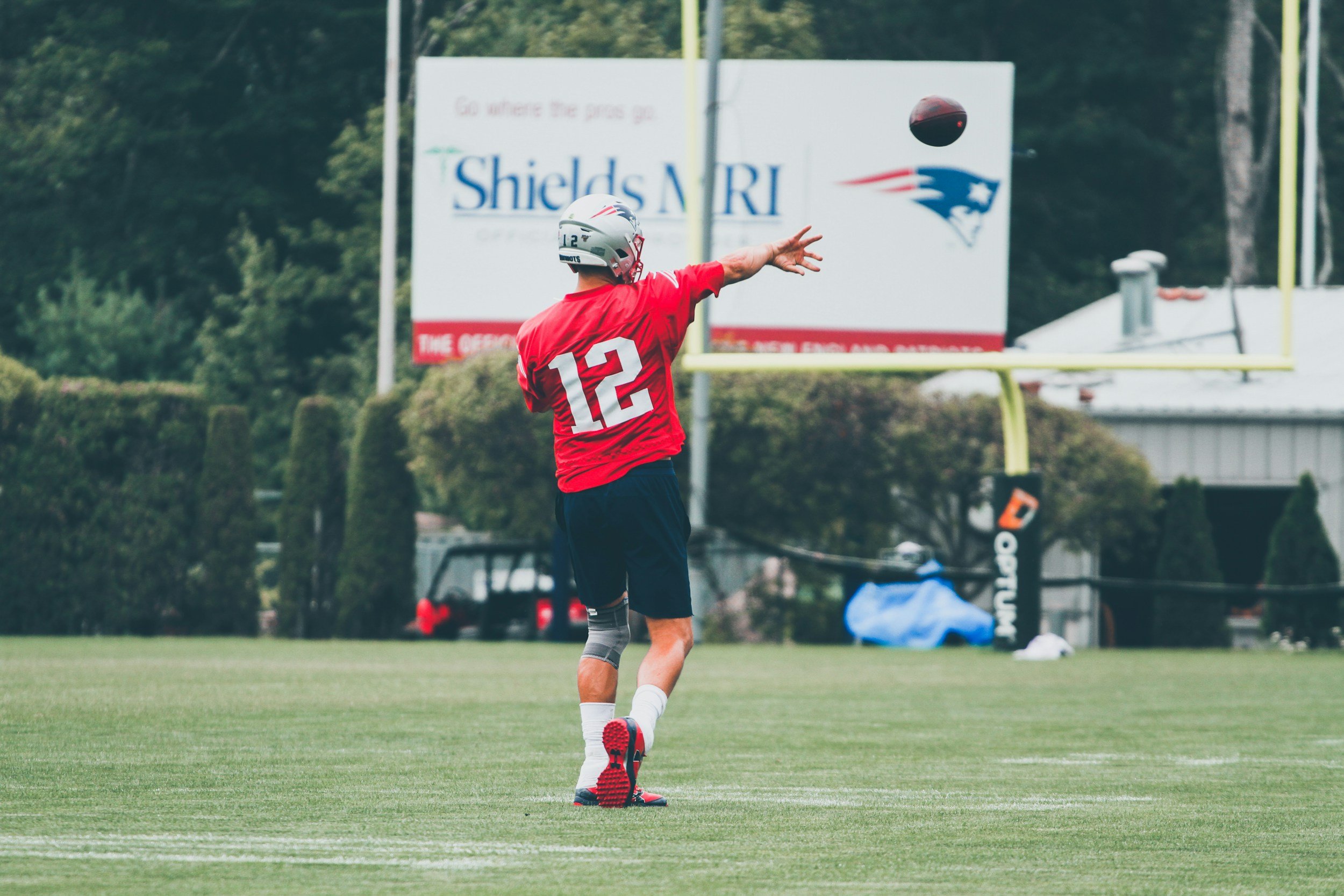
Tom Brady at practice with the New England Patriots.
Those who know me know that I am a huge sports fan — not just of the games and matches themselves, but of the preparation, the training, the sacrifice, the mental side, and everything that happens away from the spotlight. Over time, I’ve come to realise that business leaders can learn a great deal from the world of elite sport — and from the very best athletes of all time in particular.
In this article, I share observations from the careers of three athletes I have followed closely for decades: Tom Brady, LeBron James, and Roger Federer. All three are widely regarded as GOATs — the greatest of all time — in their respective sports. What interests me is not only their fame or victories, but what sustained excellence looks like when talent is abundant, competition is relentless, and failure is public.
I apply these observations to my own leadership experience and summarise my learnings as five leadership principles that, when applied consistently, I believe materially increase the likelihood of long-term success.
All too often in business, performance is equated with long hours in the office, neglecting sleep and recovery — and even taking pride in doing so. This is a false premise. Peak performance requires 24/7 discipline and respect for human needs in a holistic sense: mind, body, and mental recovery. I hope the observations and insights below serve as inspiration for high-performance leadership.
Executive summary – five leadership principles
From elite sport and leadership alike, the same fundamentals keep resurfacing:
1. Hard work is essential once talent is everywhere
2. Preparation creates an enduring edge
3. Discipline is a 24/7 commitment, not a seasonal one
4. Authenticity builds trust and followership
5. Caring for others is non-negotiable in leadership
Elite sport exposes these principles brutally. That makes it a useful reference point for leadership under pressure.
Three reference points from elite sport
Before turning to the leadership principles, a brief factual introduction to the three athletes whose careers inform the observations below.
Tom Brady is widely regarded as the greatest quarterback in NFL history. Over a 23-season career, he won 7 Super Bowl championships, was named Super Bowl MVP 5 times, and NFL regular-season MVP 3 times. He appeared in 10 Super Bowls and played at the highest level well into his mid-40s — an outlier in one of the most physically demanding professional sports.
LeBron James is one of the most accomplished players in NBA history. He has won 4 NBA championships, 4 NBA MVP awards, and 4 NBA Finals MVPs. In 2023, he became the NBA’s all-time leading scorer. Over more than two decades, he has maintained elite performance in a league defined by speed, power, and constant physical strain.
Roger Federer is widely regarded as one of the greatest tennis players of all time. He won 20 Grand Slam singles titles, including a record 8 Wimbledon championships, and spent 310 weeks ranked world No. 1, including 237 consecutive weeks. Federer remained competitive at the very top of men’s tennis for more than twenty years, across multiple generations of elite opponents.
1. Hard work is a must at the top
At elite levels, talent stops being rare.
Brady, LeBron, and Federer all competed in environments filled with extraordinary ability. None of them succeeded because the competition was weak. What set them apart was sustained work ethic over time, even as success accumulated.
At senior leadership levels, the same dynamic applies. Early in a career, talent and intelligence differentiate. Later on, almost everyone is capable and experienced. Those who continue to put in the work — especially the unglamorous work others assume they no longer need to do — gain an edge precisely because many stop increasing effort once they “arrive”.
2. Preparation creates an edge
Preparation is one of the least visible but most decisive performance disciplines.
Tom Brady became known not for flair or improvisation, but for obsessive preparation. He studied systems, opponents, and scenarios in such depth that high-pressure moments appeared calm and controlled. Decisions looked simple because the work had already been done.
In leadership, preparation plays the same role. Leaders who prepare — for meetings, conversations, days, weeks, and months — consistently get more out of the same information and time than those who rely on instinct alone. Preparation sharpens judgement, improves listening, and raises the quality of decisions. It rarely gets noticed directly, but it always shows in outcomes.
3. Discipline is a 24/7 commitment
Elite athletes do not switch discipline on during competition and off when the season ends. Standards apply year-round.
Federer’s longevity was built on consistency rather than intensity alone: structured training cycles, recovery, and constant refinement over decades. As he said in his 2024 Dartmouth Commencement Address, ”Effortless is a myth.” LeBron has been equally explicit about treating his body as a long-term asset rather than a short-term tool. This level of discipline requires sacrifice — early nights, skipped dinners, and saying no to things others take for granted.
Leadership is no different. Physical health, mental clarity, relationships, and boundaries outside work directly shape performance inside it. Leaders who neglect these areas often become overly dependent on work and ego for stability. Over time, that fragility becomes visible. Discipline outside the office is not separate from leadership performance — it underpins it.
4. Authenticity builds trust
The human side of leadership is more nuanced, and success does not require a single style.
LeBron James leads through dominance, standards, and accountability. His excellence sets a bar that can be hard to relate to simply because the gap is so large. Roger Federer led quietly, through consistency, emotional control, and respect for peers and opponents.
Tom Brady took a more relational approach, making deliberate efforts to connect across generations and personalities. His leadership leaned heavily on inclusion and trust.
All three approaches worked. The lesson is not to imitate personalities, but to recognise that being authentic does not mean being soft. It means being real, accessible, and self-aware enough to build trust. Leaders who ignore the human dimension entirely limit their impact, regardless of competence.
5. Caring is non-negotiable
If you do not genuinely care about guiding, developing, and being accountable for others, you should not be leading.
Leadership is not a personal achievement or a status marker; it is responsibility. Elite athletes understand this intuitively. Their preparation and discipline are not only about personal success, but about raising the level of the entire team.
In that sense, leadership resembles parenting more than management. Your people do not exist to serve your ego or ambition. You are accountable for their growth, performance, and long-term outcomes. This work is demanding, often invisible, and impossible to fake for long.
Closing thought
Elite sport shows us something leadership theory often avoids: there are no shortcuts. The disciplines that sustain excellence are simple to describe and difficult to live. Success can take different forms, but the fundamentals remain the same.
At the top, leadership is less about talent and more about the choices you make every day — especially when no one is watching. Studying how the greatest athletes operate offers practical lessons for how leaders perform, prepare, and sustain themselves over time.
Sources and references
This article is informed by publicly available material on elite performance and leadership, including:
Man in the Arena: Tom Brady (ESPN / Disney+, 2021)
The Dynasty: New England Patriots (Apple TV+, 2024)
Tom Brady, The 199 Newsletter, available at www.tombrady.com
Roger Federer, Commencement Address, Dartmouth College (2024)