

DNB Q3 2025: Strong Result – And Looking Good!

DNB delivered another strong quarter in Q3 2025, reporting a return on equity (ROE) of 15.8%, comfortably above its 14% target. While this is lower than the exceptionally strong 18.9% recorded a year ago, the decline is far less concerning than for many of its peers.
There are two main reasons for this: the favourable macroeconomic environment DNB operates in, and the strategic actions it has taken to strengthen its position
First, operating primarily in Norway gives the bank a powerful tailwind: the Norwegian economy remains resilient, supported by solid GDP growth, low unemployment, and easing inflation. Crucially, the central bank’s policy rate stands at 4.0% and is expected to remain elevated for several years [1]. This suggests that DNB’s net interest income, though slightly down from recent peaks, should remain at strong and sustainable levels over the medium term.
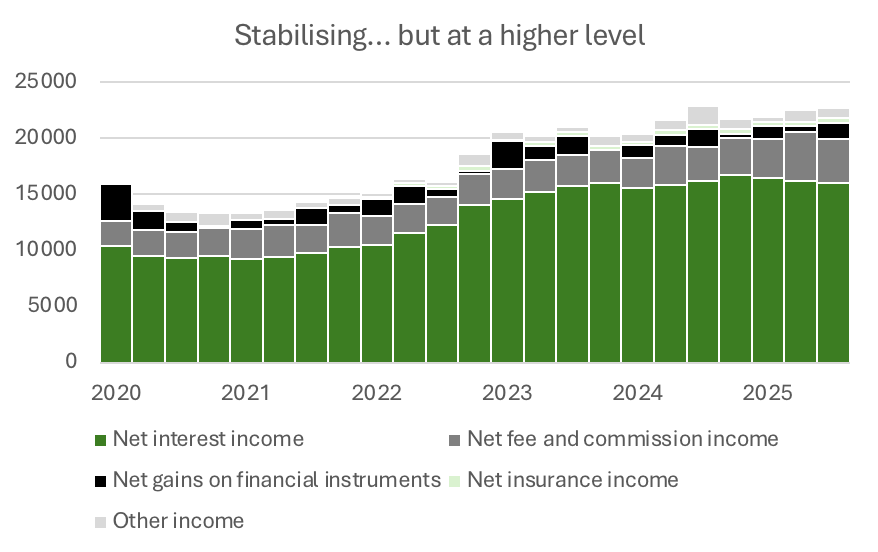
DNB’s quarterly income (NOKm). Source: DNB’s interim reports and factbooks.
But it’s not just macro tailwinds that have put DNB where they are today. They have capitalised on market opportunities and made strategic acquisitions to create new and solidify existing revenue streams.
Perhaps the most notable of those is DNB’s acquisition of Carnegie late last year [2]. This is now starting to show tangible benefits. In Q3 2025, asset and wealth management and investment banking fees increased by 70% year-over-year, reflecting both a broader offering and improved market conditions.
Taken together, these factors support a solid outlook towards 2026 and beyond. There are currently no clear signs that would challenge DNB’s ability to stay above its ROE target of 14% through the remainder of its current strategy period, which runs until the end of 2027.

DNB’s quarterly return on equity (%). Source: DNB interim reports and factbooks.
With an ROE of 15.7% after the first nine months of 2025, DNB has effectively delivered on its ROE target for the fourth consecutive year, reinforcing its reputation for consistent performance.
The strategic question now is whether shareholders will expect more. With most Nordic peers targeting a 15% ROE, some investors may push for a higher ambition level. However, DNB faces stricter capital requirements than its competitors. For example, Handelsbanken’s CET1 requirement is 14.7%, compared with DNB’s 16.6%. Higher capital buffers mechanically dampen ROE, making DNB’s current performance even more impressive.
Bottom line:
DNB combines a strong macro backdrop, resilient margins, accelerating fee income, and a track record of delivery. The bank is well positioned to sustain attractive returns over the coming years — and may soon face the “good problem” of rising shareholder expectations.
References
[1] DNB Q3/2025 result presentation: DNB Carnegie expects one 0.25% rate cut from the Norwegian central bank in June 2026 bringing the policy rate to 3.75% after which they forecast the rate to stay at that level until end of 2028.
[2] https://www.ir.dnb.no/press-and-reports/press-releases/dnb-bank-asa-acquires-carnegie-accelerates-nordic-strategy-and